Showing posts with label Prayer. Show all posts

Wednesday, October 29, 2014

Avrohom Avinu's Path: Truth

הלכות גניבה ה"ה

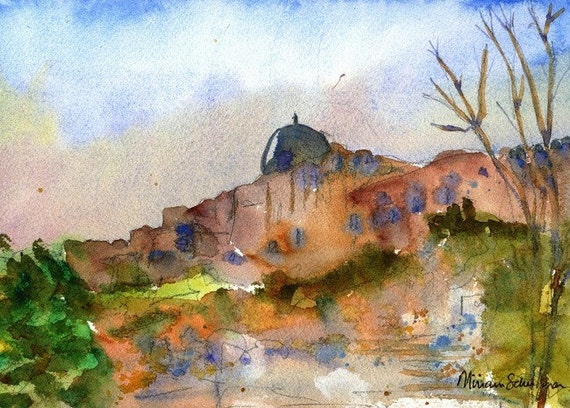
(Painting by Miriam Schulman)

Avrohom Avinu was the first to reveal the truth of Hashem's oneness in the world. Therefore, he merited everything included in Torah 9 of the second volume in Likutei Moharan (and Torah 7 in LM I).  There, the Rebbe explains that through truth one is able to acquire Eretz Yisroel, prayer, faith in Hashem, and miracles.  Avrohom merited these items through his sincerity and simplicity, for Avrohom always conducted himself with simplicity and with truth, as our sages say, "The one who walks with simplicity - this is Avrohom." (Makos 24b)  Because of these traits that he possessed, Hashem commanded Avrohom to go to Eretz Yisroel.  And, by going to Eretz Yisroel Avrohom then meritted perfected prayer and faith in Hashem to the point that he was worthy of being included in every Shmoneh Esrei, as in "Elokei Avrohom, etc."  As such, anyone who desires to have perfect faith in Hashem and to pray to Him will say, "Elokei Avrohom."    

The Torah relates that "Lot went with him [Avrohom]," (Bereishis 12:4) to explain that by definition darkness will always be bound to holiness, for Lot always followed after Avrohom to create darkness for him.  Thus, we are taught that this is the main longing and service of the holy tzaddikim.  The tzaddikim must work to reveal the truth hidden within the darkness of falsehood.  This is the reason why Avrohom told Lot to separate from him - "If you go to the left I will go to the right."  Avrohom was indicating to Lot that he did not want to walk in his path, for if Lot wanted to confuse Avrohom via the left side, which is related to evil desires and thoughts, then he would go to the right, which is the path of Torah and truth.  However, if Lot preferred to go to the right, which in this case is the place of the evil inclination under the guise of mitzvos, then Avrohom conceded that he would go to the left, for nothing is worse then this falsehood of the "right".  

This is why Hashem told Avrohom to "go for himself" (לך לך).  Hashem implied that Avrohom should go to "himself" alone, to the essense of truth, which is Avrohom's essense and vitality.  

Tuesday, October 14, 2014

Bounty Through Prayer

הלכות ראש השנה ה:ל

All bounty and blessings are drawn down into the world only through Torah and prayer. The degree to which one exerts himself in prayer and learning Torah determines the degree to which the burden of earning a livelihood will be removed from him and will be done by others (for his sake) as our Sages have said. 

Wednesday, October 1, 2014

Waiting in the Bush

הלכות ראש השנה ו:א
("The Blooming Ram" by Joan Miro)

The root of the power of the shofar on Rosh Hashannah is its relation to the shofar of the ram of Yitzchak. The ram of Yitzchak, which is the secret of the shofar, exists and is drawn down into the world only by the merits of those who pray, search, ask, and scream out to Hashem - those who ask, "Where (איה) is Your place of glory?" We see in the passage relating the Binding of Yitzchak that only after Yitzchak asked, "Where is the sacrificial lamb?" (Bereishis 22:7) did the ram actually come into being, so it could be offered upon the alter.  But, before this moment its horns were tangled up in a thorn bush.

Reb Noson is describing a fundamental idea in relating to Hashem during a time of distress.  The antidote to the poisons we've ingested are ready to be put to use.  But, it's up to us to call out to Him and ask for help. When we find ourselves in a bind our first move is to try to figure everything out on our own.  But, inevitably we see that we are unable to accomplish what we've set out to do.  The only thing left, which should have been the first step in the first place, is to call out to Hashem.  This is what Hashem wants from the beginning, but He is waiting for us to first ask where He is.  "Where is Your place of glory?" If it is here, then where are the yeshuos? At that moment Hashem reveals that where you're standing is the place of His glory, and suddenly the horns are untangled, the ram is put to use, and the tikun is complete.

Sunday, May 20, 2012

Rebuilding Yerushalayim and Tefilah


ל"ה - הלכות ערלה ד:ג

(Painting by Margarita Levine)

Once a person is able to subdue his three principle inclinations for sexual immorality, food, and money, which correspond to the three years of the orlah when the fruit of such a tree is forbidden to be eaten, he then merits the concept of rebuilding Yerushalayim.  This relates to complete fear of God, which depends on one's heart.  Therefore, after the first three years of orlah one must bring the first fruits to Yerushalayim, which are a concept of complete fear that a person merits because he cast away his evil urges.    He succeeds to cast away his evil urges because he did not partake of the orlah fruit.  And, by rebuilding Yerushalayim one merits tefilah.  On the fourth year all of one's fruits "shall be holy and will give praise to Hashem." (Vayikra 19:24)  "Holy and will give praise" refers specifically to prayer, which consists of praise to Hashem.  A person merits prayer by helping to rebuild Yerushalayim and subduing his three main urges.

Sunday, April 22, 2012

Drawing Down the Holiness of Eretz Yisrael

קל"ה - הלכות בית כנסת ה:א

(Painting of the Galil by Lael Har)

The essence of a shul's holiness is drawn down from the holiness of Eretz Yisrael, for in Eretz Yisrael is the essence of the ascent of prayer, as it is written, "and pray to You toward their land." (Melachim I 8:48)  And the essence of the holiness of Eretz Yisrael is through, "He has declared to His people the power of His works." (Tehillim 111:6)  This corresponds to what Razal relates, "He took it [Eretz Yisrael] from them and gave it to us," (Rashi on Bereishis), for through this we have to power to sanctify every place in the word with the holiness of Eretz Yisrael.  As such, the holiness of a shul draws upon the concept of conquering Eretz Yisrael, for through, "He declared to his people the power of His works," they were able to conquer the land.  And therefore through building shuls and batei midrash for the sake of Heaven, the way one must act, walk, and return to our holy land, and to conquer it from the hand of the Sitra-Achra is drawn down to us even now.

Saturday, April 21, 2012

The Light of the Moon Will Be Like the Light of the Sun

קל"ה - הלכות ראש חודש ה:יב

(Painting by Marc Chagall)

The sun and the moon correspond to Moshe and Dovid HaMelech, which in turn relate to glory and kingship, which relate to Torah and prayer respectively.  As is known, the years are counted according to the cycles of the sun, and the months according to the cycles of the moon.  Therefore, on Rosh HaShanah, which is on Rosh Chodesh, the sun and the moon are like one, that is, both are equal in stature.  This relates to the idea that the "light of the moon is like the light of the sun."  This happens once the quality of prayer is increased by turning the Torah that one learns into prayer, and by praying that the Torah be sustained.

Rectification of the Moon and Prayer

קל"ה - הלכות ראש חודש א:א


Blemished prayer is a concept of a flaw within the moon.  On Rosh Chodesh, which is a time of rectification for the moon since it will begin to become full again, it is also a time for the rectification of prayer.